

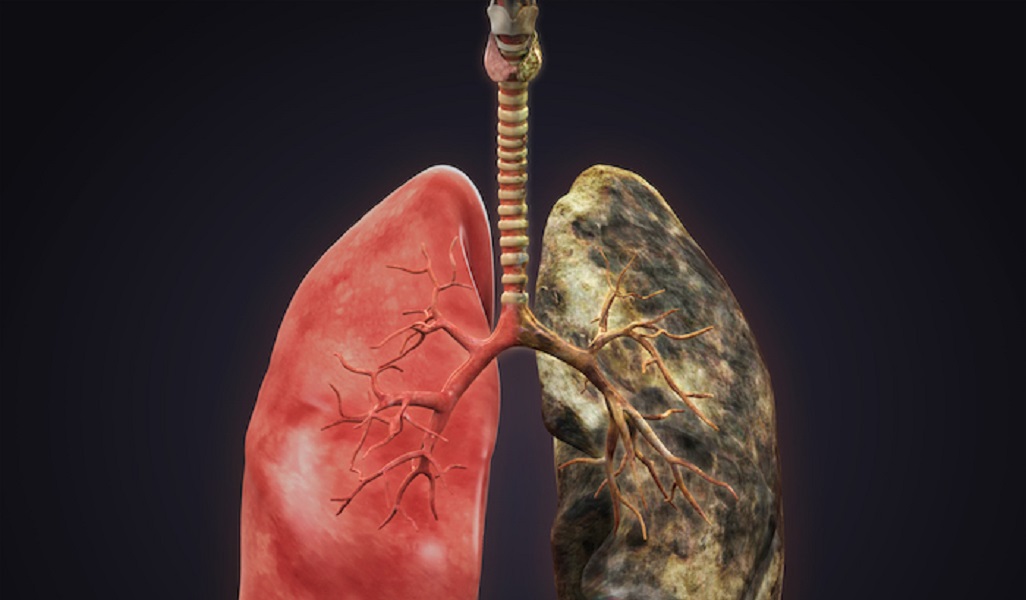
Traditionally, surgeons want lung cancer patients to quit smoking at least a month before surgery, but a recent study from the University of Cincinnati suggests that surgery may still be an option for patients who can’t quit.
Patients who continue to smoke ahead of lung cancer surgery do have a higher risk of pulmonary complications, but their short-term mortality rate is similar to patients who were able to stop smoking before surgery, the study suggested.
“We really want patients not to smoke and to quit smoking before surgery,” said Dr. Robert Van Haren, an associate professor of clinical surgery in the UC College of Medicine and corresponding author for the study.
“Smoking is obviously very bad and is associated with developing cancer and heart disease. And in our study, it shows it does increase the chance of post-operative complications,” Van Haren said. “However, if some patients are unable or unwilling to quit smoking, we still can safely offer surgery for treatment of their lung cancer.”
For this study, UC researchers analyzed outcomes for 85,124 patients who underwent lung surgery and were registered between 2018 and 2023 in the Society of Thoracic Surgeons General Thoracic Surgery Database.
Pulmonary complications were more frequent among patients who currently smoked — 34.6% versus 30.5% — but mortality didn’t differ by smoking status. The rate of death was 1% for both individuals currently smoking and those who quit before surgery.
The research was recently published in the Journal of American College of Surgeons.
Lung cancer is by far the leading cause of cancer death in the United States, accounting for about 1 in 5 of all cancer deaths, according to the American Cancer Society. Each year, more people die of lung cancer than of colon, breast, and prostate cancers combined.
However, the number of new lung cancer cases continues to decrease, partly because more people are quitting smoking or not starting, the society said.